


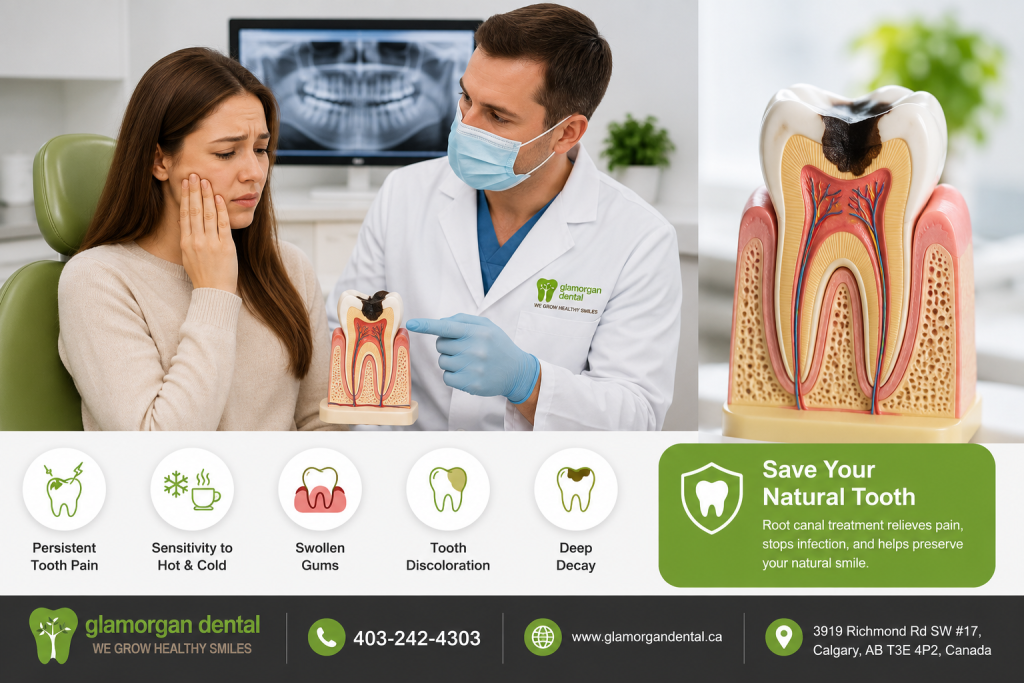
Have you ever felt a sharp pain in your tooth while eating ice cream or drinking hot soup? Teeth are tough, but they can get sick just like the rest of your body. When a tooth gets a deep infection, you might need a special procedure to save it. This procedure is called a root canal treatment. A dentist in SW Calgary can examine the tooth and determine whether this treatment is needed.
Many people feel scared when a dentist says those words. However, this treatment is actually a safe way to stop your toothache and keep your smile healthy.
What is a Root Canal Treatment?
Inside every tooth, under the hard white part you see, there is a soft middle called the pulp. The pulp has nerves and blood vessels that help the tooth grow when you are young. If bacteria enter this area through a deep cavity or a cracked tooth, the pulp becomes inflamed and infected.
Root canal treatment is when the dental provider removes the infected pulp and bacteria from inside the tooth. After cleaning it, the space is sealed up so bacteria cannot get back in. This stops the infection and prevents the tooth from being pulled.
Red Flags: Signs You Need to See a Dentist Near You
Your teeth talk to you through pain and other signs. If you notice any of these symptoms, it is time to visit a dentist near you right away.
1. Constant, Deep Pain
A normal toothache may come and go, but when the nerve inside the tooth is infected, the pain usually becomes stronger and does not go away easily. It is often felt as a deep, throbbing pain that recurs or persists for long periods. Many people notice that the pain feels worse when they lie down or bend forward. When the tooth is infected, pressure builds inside the inner part of the tooth. This increased pressure makes the pain feel stronger and more constant, which becomes difficult to ignore.
2. Pain When Eating Hot or Cold Food
Does your tooth hurt for a long time after you drink cold water or hot tea? If the pain lingers for more than a few minutes, the nerve inside the tooth is likely dying.
3. Swollen and Tender Gums
An infection inside the tooth can travel down to the bone. This can make the gums near the bad tooth look red and swollen. Sometimes, a small bump that looks like a pimple will form on the gums.
4. The Tooth Changes Colour
An infected tooth can turn dark gray or blackish. This happens because the blood supply to the tooth has stopped, similar to how a bruise turns dark on your skin.
5. Bad Taste or Bad Smell in Mouth
A tooth infection can sometimes leak pus or bacteria into the mouth. This may cause a constant bad taste or bad smell that does not go away even after brushing. It can be a sign of a deep infection that may need quick care from a dentist near you and possible root canal treatment.
Why You Shouldn’t Wait
Ignoring a tooth infection will not make it go away. The bacteria can continue to spread to the surrounding bone and nearby teeth. This may lead to a bigger infection called an abscess, which can cause severe pain and even make a person feel unwell overall. Early care helps keep the treatment simpler.
Getting checked on time for root canal treatment in SW Calgary can prevent the infection from getting worse. A dentist can find the problem early and protect the natural tooth. Waiting too long may lead to more pain, swelling, and more complex dental treatment.
Gentle Treatment For Saving Your Tooth!
At Glamorgan Dental, we provide gentle care for patients who need safe and effective dental treatment. We focus on simple, clear dental care that helps protect your natural teeth and reduce pain. Our team uses modern tools and follows proper clinical steps for root canal treatment and other dental needs. We always aim to make every visit calm and comfortable for all age groups.
We are here to help you keep your smile healthy. Book your appointment today at Glamorgan Dental.
FAQ
Does a root canal treatment hurt?
No, the procedure does not hurt. The dental provider uses a special numbing medicine to numb the tooth and the surrounding area before starting. You will feel relaxed, just as you do when you get a normal cavity filled. The treatment actually stops the pain you were already feeling from the infection.
How long does the treatment take?
Most of the time, the procedure takes one or two appointments. Each visit usually lasts between 30 to 90 minutes, depending on how many roots the tooth has.
Can a tooth heal on its own without treatment?
No, a tooth nerve cannot heal itself once it is deeply infected. Without help from a dental professional, the infection will get worse, and the tooth may have to be completely pulled out.
What happens after the procedure is done?
The tooth might feel a little tender for a few days. After the inside of the tooth heals, a dental crown is usually placed on top. The crown acts like a helmet, strengthening the tooth so you can chew normally again.
How can someone avoid needing this treatment in the future?
The best way to protect teeth is to brush them twice every day and floss daily. It is also important to visit a local clinic for regular cleanings and checkups twice a year so cavities can be fixed while they are still small.