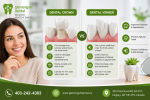


Have you been wondering if a routine dental visit gives a complete picture of your oral health? A comprehensive dental exam provides a more detailed look at your teeth, gums, bite, and other parts of your mouth to identify concerns that may need attention. If you are searching for a dentist in SW Calgary, understanding what happens during this type of examination can help you feel prepared for your visit. It may be especially helpful when beginning care with a new dental provider, reviewing several dental concerns, or creating a plan for ongoing oral care.
What Is Checked During a Comprehensive Exam?
A comprehensive exam involves more than simply looking for cavities. The goal is to build a clear picture of your current oral health and identify concerns that may need attention.
Depending on your needs, the examination may include:
- Checking teeth for cavities, cracks, chips, or signs of wear
- Examining the gums for signs of inflammation or disease
- Looking at existing fillings, crowns, bridges, or other dental work
- Checking the way the upper and lower teeth meet
- Examining the jaw and areas around the mouth
- Reviewing your dental and medical history
- Taking dental X-rays when needed
The exact checks can vary based on your age, symptoms, dental history, and risk factors.
What Happens During a Regular Dental Checkup?
A regular checkup helps a dentist near you check your oral health and look for any new problems. It may include a dental exam and cleaning if needed.
During a routine visit, the dental team may:
- Check for new cavities.
- Examine the gums
- Look for changes in existing dental work.
- Remove plaque and tartar during a cleaning.
- Discuss brushing and flossing habits.
- Recommend follow-up care if a concern is found.
Routine visits help keep track of your oral health between more detailed assessments.
How Is a Comprehensive Exam Different From a Checkup?
The main difference is the depth and purpose of the assessment. A regular checkup focuses on monitoring ongoing oral health, while a comprehensive exam provides a broader evaluation of the mouth and helps establish a detailed baseline.
A comprehensive exam may be useful when:
- Visiting a dentist near you for the first time
- Experiencing new or unexplained dental concerns
- Developing a new treatment plan
- Having a long gap between dental visits
- Reviewing several existing dental issues
A regular checkup may then be used to monitor your oral health during future visits.
Are X-Rays Always Part of a Comprehensive Exam?
Not necessarily. Dental X-rays are recommended based on individual needs rather than automatically for every patient. Factors such as age, dental history, symptoms, and previous X-rays can affect whether new images are needed. X-rays may help identify problems that cannot be seen during a visual examination, such as certain areas of decay between teeth or changes below the gum line. The type and number of X-rays should be based on the information needed for your assessment.
Why Is a Comprehensive Exam Important?
A detailed examination can help identify dental concerns before they become more difficult to manage. Some problems may not cause noticeable symptoms in the early stages.
A complete dental checkup by a dentist in SW Calgary can help look for:
- Tooth decay
- Gum problems
- Worn teeth
- Cracks or damage
- Existing fillings, crowns, or other dental work
- Bite problems
- Areas that may need regular checks
Finding a problem early does not always mean you need treatment right away. Some issues may only need monitoring over time.
When Should You Consider a Comprehensive Dental Exam?
A comprehensive exam may be recommended when there is a need to understand your overall oral health in greater detail. It can be especially useful after moving to a new dental provider or when several dental concerns need to be reviewed.
Consider asking about a comprehensive exam if:
- It has been a long time since your last dental visit.
- You have several dental concerns.
- You have recently experienced tooth pain or sensitivity.
- You have noticed changes in your gums.
- You need a detailed treatment plan.
The appropriate type of examination can be discussed based on your individual situation.
Can a Comprehensive Exam Replace Regular Checkups?
No. These two types of visits serve different purposes. A comprehensive exam provides a detailed assessment, while regular checkups help monitor changes and maintain ongoing oral health. Think of a comprehensive exam as a detailed starting point or review, while routine visits help track your oral health over time. Both can play a role in maintaining healthy teeth and gums.
What Should You Expect After the Exam?
After the exam, your dentist in SW Calgary can explain what they found and which areas may need treatment or regular checks. If treatment is needed, they can explain your options and next steps before starting. Not every concern found during an exam requires immediate treatment. The recommended approach depends on the condition of your teeth and gums and the level of risk involved.
Keep Your Oral Health on Track!
Have you noticed changes in your teeth or gums, or is it time for a more detailed dental assessment? A thorough examination can help identify concerns, review your current oral health, and explain which care options may be suitable for your needs. Understanding your dental health early can also help with timely monitoring and treatment when needed. Book an appointment with Glamorgan Dental to receive a detailed evaluation, clear guidance, and personalized care based on your oral health needs.
FAQs
Is a comprehensive dental exam painful?
A comprehensive dental exam is usually simple and non-invasive. Some areas may feel a little sensitive if your teeth or gums are already sore, but the exam is generally focused on checking your oral health.
How often is a comprehensive dental exam needed?
There is no single schedule for everyone. The need depends on dental history, oral health, age, risk factors, and whether new concerns have developed.
Is a dental cleaning the same as a comprehensive exam?
No. A cleaning removes plaque and tartar from your teeth. A comprehensive exam looks closely at your teeth, gums, bite, and overall mouth health.
Can a comprehensive exam find problems without symptoms?
Yes. Some dental conditions may develop without noticeable pain or other clear signs. A detailed examination can help identify changes that may not be obvious during everyday activities.